On April 12, 2023, the United Nations General Assembly requested the International Court of Justice to advise on responsibilities countries have to reduce greenhouse gas emissions and legal consequences that may arise if they fail to do so. The request gave particular attention to small island developing states (SIDS), which face serious threats from rising sea levels and the possible loss of territory and displacement of entire populations. The court was therefore asked an important question about the responsibilities of governments to address the threat of climate change.
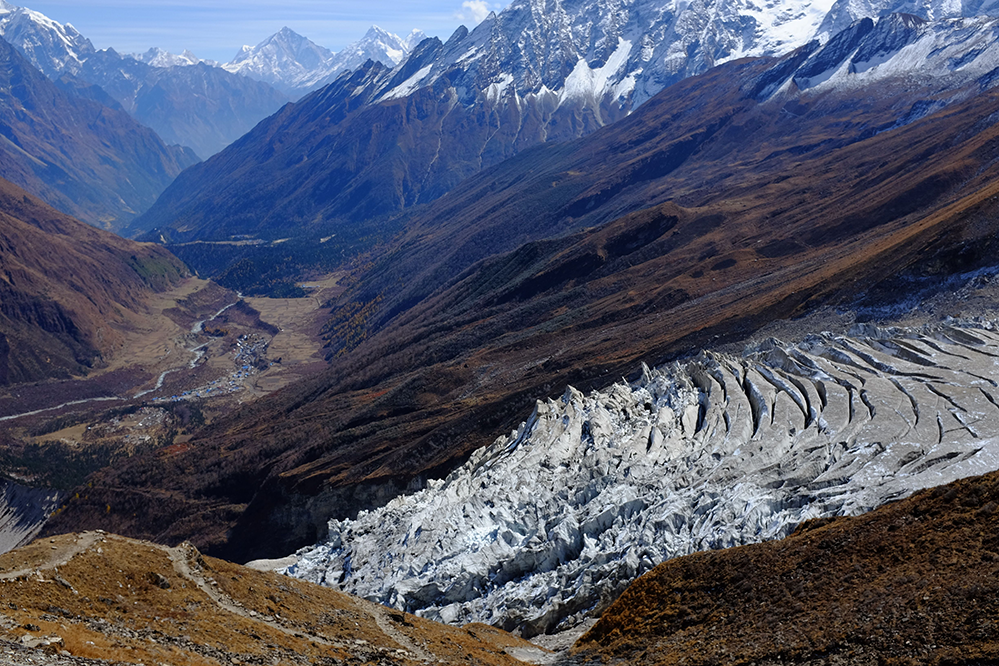
Climate vulnerability is not limited to island countries alone. The Hindu Kush Himalayan region spans 3,500 km across eight countries including Afghanistan, Pakistan, Bangladesh, Bhutan, Nepal, India, China and Myanmar. The mountains serve as a critical “Third Pole” in holding the world’s largest ice volume outside of the poles. Around 240 million people live in this region, and nearly two billion people depend on its rivers for water, food, farming, and energy. The region faces parallel threats of rising temperatures, glacial melt, floods, droughts, and disruptions to agriculture and water systems. Research by the International Center for Integrated Mountain Development suggests that even if global warming is limited to 1.5 ° C, the region could lose up to one- third of its glaciers by the end of the century, posing serious risks to water, food, and livelihood systems for nearly two billion people dependent on Himalayan river basins. While these regions may not face the same risk of complete state disappearance as island nations, the scale of human and environmental harm remains enormous. While this article focuses primarily on Nepal, many of the climate risks and legal challenges discussed are shared across the wider Hindu Kush Himalayan region.
State Obligations to Limit GHG Emissions
The ICJ emphasizes that all states bear obligations under international law to prevent significant environmental harm by limiting GHG emissions. These obligations are based on the principles of common but differentiated responsibilities along with ideas of fairness and equity. This means that all countries share responsibility for addressing climate change, but not all countries carry the same level of responsibility. Countries that industrialized earlier and contributed more to greenhouse gas emissions over time are expected to take greater action because they played a larger role in causing the current climate crisis. At the same time, developing countries with more gradual industrialization have minimal GHG contributions compared to hyper-industrialized countries.
This discrepancy offers strong justification for acknowledging the need of curbing and policing industrialized nations' emissions , especially considering most of the burden is placed on countries in more vulnerable contexts. For instance, Nepal contributes only 0.027% of global emissions, while neighbors India and China are among the world’s largest emitters. According to the Global Carbon Project (2023), China accounts for roughly 20% of global CO2 emissions, India for 7-8%, and the United States for 14-15%. The ICJ opinion mentions that both historical and current emissions must be considered when assessing state responsibility for climate change. States that have relied on fossil fuels throughout the first and second industrial revolutions to propel their economic growth have contributed disproportionately to the accumulation of greenhouse gases in the atmosphere. As climate journalist and author Naomi Klein whose work mainly focuses on the relationship between climate change, economic systems, and global inequality explains in her book This Changes Everything (2014), countries that industrialized early and relied heavily on coal, oil, and gas have played a far greater role in driving global temperatures increases than those that entered the globalized economy only in recent decades.
This distinction is scientifically significant because carbon dioxide has remained in the atmosphere for centuries, with some of the effects persisting for millennia. As a result, today’s climate crisis is largely shaped by the cumulative emissions of early industrialized countries, which bear a substantial share of historical responsibility.
Simultaneously, the court signals that present and rapidly increasing emissions from emerging economies such as China and India cannot be ignored. This recognition is particularly important when assessing the vulnerability of Nepal’s mountainous climate system, given its geographic position between India and China, who account for over 25% of global emissions. Nepal’s location places it in a highly sensitive ecological zone. The transboundary climate impacts driven by emissions beyond its borders intensify environmental risks, despite Nepal’s minimal greenhouse gas emissions. Considering emerging economies' rise in emissions lead to ballooning economic capacity, their accumulating capital provides them with greater ability to support measures aimed at mitigating and responding to the climate harm caused by their development activities.
Nepal as a case study of Himalayan Climate Vulnerability
Although the ICJ advisory opinion largely focuses on sea-level rise affecting Small Island Developing States (SIDS), it does not explicitly address mountain region specific risks. Glacier retreat, glacial lake outburst floods, erratic monsoons, and rising temperatures in high altitude regions, are climate risks faced throughout the country.
In 2025, Nepal’s Bhotekoshi River experienced catastrophic flooding caused by the collapse of a supra glacial lake near the Nepal-China border. The moraine dam failed due to prolonged snowmelt sending torrents downstream. Such floods are becoming more frequent as rising temperatures destabilize high-altitude ice systems.
Climate stress is equally visible in Nepal’s agricultural plains. In July 2023, Madhesh Province – one of the country’s main rice-producing regions was declared a “disaster Zone” due to severe drought. Disrupted monsoon patterns delayed transplantation and directly threatened food security, demonstrating how climate change affects both highland and lowland systems.
Further, glaciers are not only environmental assets but also hold economic, cultural and spiritual significance for Nepal. Mountain regions support tourism, hydropower, farming and local livelihoods. At the same time, many mountains, rivers, and lakes in Nepal are considered sacred by local communities and are closely connected to religious beliefs and cultural practices in both Hindu and Buddhist traditions. Pilgrimage sites such as Muktinath Temple and Gosainkunda are closely connected to glacier-fed water systems and mountain landscapes. As glaciers melt and ecosystems become unstable, the impacts therefore threaten not only economic development and environmental security, but also cultural identity, spiritual heritage, and traditional ways of living.
As emphasized by the Intergovernmental Panel on Climate Change, rising global temperatures intensify evaporation, accelerate snow and ice melt, and amplify extreme events. For a mountainous country like Nepal, these processes compound vulnerabilities across altitudes. Thus, although Nepal’s risks differ geographically from those of SIDS, the magnitude, systemic nature, and long-term implications of its climate exposure are equally profound and seek comparable legal and policy recognition.
Recognition of Mountain Vulnerabilities in the ICJ opinion
The ICJ’s advisory opinion generally avoided dividing countries into categories of “more” and “less” affected states. The court emphasized that climate change is a global problem and that all countries have responsibilities under international law. Its reasoning was based on ideas such as the universality of obligations, the transboundary nature of greenhouse gas emissions, and the availability of remedies to all affected states.
Small Island developing states received particular attention throughout the discussions surrounding the advisory opinion. One important reason is that many island states face an existential threat from rising sea levels. In some cases, climate change could permanently submerge parts of their territory, displace entire populations, and even raise questions about sovereignty and statehood under international law. This makes the legal situation of SIDS especially urgent and unique.
Mountain regions such as Hindu Kush Himalayas may not face the complete disappearance of entire states in the same way. However, they still face severe and long-term climate risks, including glacier loss, water insecurity, floods, damage to agriculture, and threats to local cultures and livelihoods. There has been evidence of community shift as the effects of climate change could be seen in daily lives. A Samjung village in the Mustang region of Nepal is emptied as a local resettle to have better water access and to adapt to changing weather patterns, which particularly is affecting the ability of people to live in particular places in the entire region.
Vice President Sebutinde criticized the court’s cautiousness on separate opinions, arguing that least developed countries and Small Island Developing countries deserved stronger recognition under the principle of Common but Differentiated Responsibilities. These are the nations contributing little to global emissions but facing the most serious consequences. In this context, Judge Sebutinde suggested that states suffering direct and disproportionate climate harm could potentially invoke Article 42 of the International Law Commission’s Articles on Responsibility of States for Internationally Wrongful acts, which allows an injured state to hold another state responsible for breaches of international obligations. Her reasoning implies that countries experiencing severe climate impacts despite minimal emissions may have stronger grounds to seek accountability from major emitting states. This reasoning could also apply to Nepal and the wider Himalayan region, where communities face severe climate impacts like glacier loss, floods, and water insecurity despite contributing very little to global greenhouse gas emissions.
Limited Legal Avenues
International law provides only limited ways to bring climate related claims, especially for vulnerable regions such as the Hindu Kush Himalaya. Communities across the region are already facing glacier loss, floods, changing water systems and threats to livelihoods, despite contributing very little to global greenhouse gas emissions. However, the people most affected by these harms cannot directly bring claims before major international courts.
Under Article 34 (1) of the Statute of the International Court of Justice (ICJ), only states can bring cases before the court. Individuals, local communities, and civil society groups affected by climate change cannot directly file claims against major emitting states. As a result, affected Himalayan communities must rely on states to raise their concerns at the international level.
Human rights - based legal avenues are also limited. Some countries in the region, including Nepal, have accepted the Optional Protocol to the International Covenant on Civil and Political Rights,which allows complaints before the Human Rights Committee. However, major neighbouring emitters such as India and China have not accepted this mechanism. As a result, the Human Rights Committee cannot serve as an effective forum for transboundary climate complaints involving those states. The absence of shared procedural commitments closes off a potential human rights-based avenue.
Even state to state claims before the ICJ face major barriers. In theory, affected states in the region like Nepal could bring claims against high emitting states before the ICJ. However, the court’s jurisdiction is consensual, not automatic. Jurisdiction may arise in three main ways: a) where a treaty expressly provides for referral of disputes to the ICJ, b) where states have made optional clause declarations accepting compulsory jurisdiction and c) where both parties agree, after a dispute arises, to submit the matter to the court. Many major emitters- including India and China have not accepted compulsory ICJ jurisdiction. Moreover, key climate instruments such as the United Nations Framework Convention on Climate Change and the Paris Agreement rely primarily on negotiation and political processes for dispute settlement rather than automatic judicial review.
Way Forward
This consent based structure makes it difficult for countries in the Hindu Kush Himalayan region to pursue formal legal remedies at the international level. In response to this limitation, countries in the region are increasingly relying on climate finance and regional cooperation mechanisms rather than formal litigation alone.
One important development is the growing use of loss and damage and adaptation funding. The Loss and Damage Fund established at COP27 was designed to support vulnerable developing countries facing severe climate impacts. Existing climate finance mechanisms have already supported regional adaptation efforts. For instance, in Nepal, the Green Climate Fund approved a grant of approximately USD 36 million for projects aimed at reducing the risks of glacial lake outburst floods through early warning systems, lake drainage, and community preparedness programs. Though this was fortunately a grant, debate continues over such support should be provided primarily through grants rather than loans, since climate- vulnerable countries contributed minimally to the emissions driving the crisis.
Political and diplomatic initiatives are also opening new spaces for cooperation.In April 2026, the First International Conference on the Transition Away from Fossil Fuels, held in Santa Marta, Colombia, brought countries together to discuss reducing fossil fuel dependence. Although major Himalayan emitters such as India and China were not part of the Santa Marta conference, the meeting reflected a broader shift toward political and diplomatic cooperation outside traditional court-based climate mechanisms. For vulnerable regions such as the Hindu Kush Himalaya, such initiatives may provide future opportunities to build alliances around climate finance, adaptation support, and just transition policies.
____
Manju Khadka is an Under Secretary in the legal service for the Government of Nepal and holds an LLM from GW Law School.
The opinions and experiences presented in guest articles are those of the author, and do not necessarily reflect the views of the Center.


