
Fueling the Industrial Revolution and providing a crucial source of lighting, whale oil became an increasingly valuable resource during the 19th century. But what seemed like an endless resource quickly proved otherwise. Overhunting disrupted entire ecosystems, leading to declines in krill populations, a vital food source for many marine species. In some regions, krill levels remain below pre-industrial whaling numbers. Overhunting also impacted maternal lineages, erasing culturally significant feeding grounds and migration routes. The scarcity of whales caused food insecurity and changes in dietary habits among local Indigenous communities, paving the way for modern cardiometabolic health challenges in the Arctic. Despite clear evidence of overexploitation, the industry prioritized profit over sustainability, disregarded long-term consequences, and continued the hunt.
Fast forward 170 years, and we see a similar trend in large-scale renewable energy. The climate crisis has given rise to a new “green accumulation horizon” that often prioritizes progress over the well-being of local communities, particularly low-income and Black, Indigenous, and (other) People of Color communities. For those of us driving or supporting the renewable energy transition, it's time to reflect on what - and who - we are willing to sacrifice in the fight against climate change. From the relentless pursuit of whale oil in the 19th century to the lithium mines fueling today’s green energy transition, the way we “other” species, communities, and even entire ecosystems is built into the foundation of our energy system. As a science communicator and energy equity advocate, I see troubling parallels between the whale oil boom of the past and our race for renewable energy today. If we don’t confront the dangerous patterns of exploitation and exclusion embedded in this transition, we risk repeating history under the guise of sustainability.
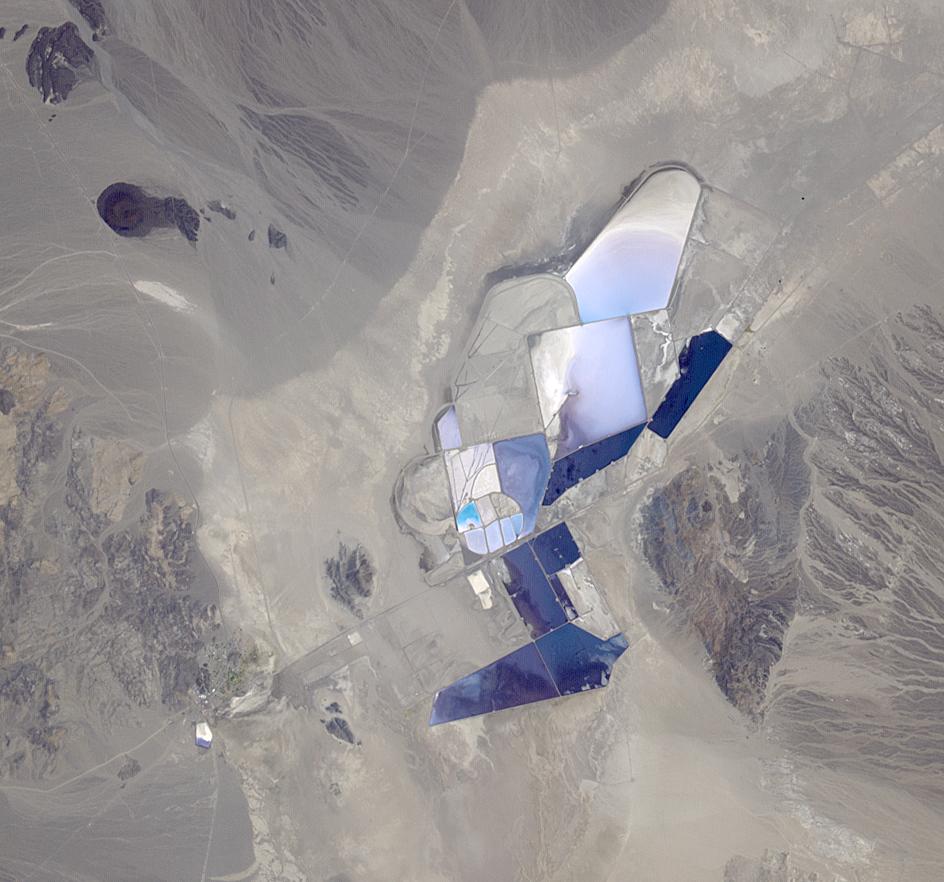
At first glance, the bloody history of the whale oil industry might seem worlds apart from the renewable energy transition, but beneath the surface lies a shared legacy of economic opportunity, alongside exploitation and exclusion. Both renewable energy and whale oil gained popularity not just because they replaced less desirable fuels, but due to significant scientific, technological, and market-related advancements.
There is another more sinister similarity between the two industries: the use of “othering” to justify extraction and exploitation. Othering is often mentioned in relation to racism as a dehumanizing tool through which “another is transformed into The Other, from one of Us into one of Them” (emphasis added). But othering is a concept that transcends species. The Eurocentric worldview sees humans as separate from nature, as something that we can dominate and own. Othering allows us to exploit and abuse with fewer moral implications.
Whales were often seen as the other, as commodities without any inherent rights or values outside of what they could provide for humans. Whalers would speak about whales in economic terms such as to “kill 140 barrels of sperm oil” or land a “$4,000 sperm”. Whale products were often marketed using “man versus beast” narratives, heavily relying on romantic imagery of risky and dangerous adventures. Nearly 3 million whales later, their populations were driven to the brink of collapse.
While fossil fuels did not save the whales, they eventually replaced whale oil. But the mechanism of othering remained, enabling the continued exploitation of systematically excluded communities and nature. This pattern is now echoed across large-scale renewable energy projects as well. While these projects are necessary to reduce global greenhouse gas emissions and other environmental impacts caused by the burning of fossil fuels, they can still perpetuate harm. It is understandable that, with daily reminders of the dangers of climate change, such as the devastating wildfires in LA, we cling to renewable energy as a “cure-all” and overlook the deeper undercurrent of othering that remains largely unexamined.
In the renewable energy sector, othering does not appear in a single form, but manifests in multiple, interconnected ways. The othering of nature has created a unilateral relationship, a void of reciprocity. Nature only exists to serve. Nowhere is this clearer than when entire landscapes are forever changed by the flooding for hydro dams, as seen in the 2024 filling of the Site C dam in Canada, which submerged 5,550 hectares of land. Much of this land held cultural significance for First Nations in the area and served as a vital wildlife habitat.
Just as nature is othered and exploited, so too are people. The negative impacts of large-scale renewable energy projects disproportionately fall on systematically excluded groups, such as Indigenous peoples and People of Color. Their health and well-being are treated as expendable for projects labeled as "critical infrastructure”. The cobalt and copper belt in the southern Democratic Republic of the Congo, essential for powering renewable energy technologies, is becoming a "sacrifice zone." Local women are grappling with severe reproductive health issues, including increased rates of miscarriages and birth defects. Meanwhile, toxic contamination of water sources has plunged communities into extreme food insecurity, leaving many to survive on just one meal a day.
At the same time, there is an increasing trend to brand land defenders and activists as terrorists. This type of othering helps delegitimize their concerns and enables governments to prioritize corporate interests over community rights. A clear example of this is the anti-terror legislation used by the government of the Philippines to intimidate and criminalize environmental activists while expanding mining on Indigenous lands and key ecological areas.
While some harms may be easier to spot or understand than others, it is easy for those of us in the Global North or large cities to gloss over them because they often remain invisible. Much like whaling was carried out far out at sea, away from the cities relying on its products, green extractivism unfolds in the Global South and remote mining towns. This physical distance makes the social and ecological costs largely invisible to the people who benefit from these raw materials. This invisibility is reinforced by psychological distance, which allows the harms of extraction to feel far away in space, pushed into the future, or experienced by “others,” weakening emotional engagement and the sense of urgency to act.
The cure for systemic othering is belonging - systems that center inclusion, dignity, and mutual recognition at every level. This means that communities, especially those historically excluded, have a genuine voice in decision-making, nature is treated as a partner rather than a resource, and the benefits and burdens of energy production are shared equitably so no one is left behind. But the root of othering runs deep: it starts within us and isn’t something that can easily be legislated away.
Moving toward belonging requires us to actively call out othering when we see it. The next time you hear about a large-scale renewable energy project, pause and look for the signs. Ask yourself: What power dynamics might be at play here? What reasoning is used to justify the project? What words are used to describe any resistance? Let’s move beyond passive observation and commit to asking hard questions and holding ourselves and systems accountable for equity and fairness in the transition to renewable energy.
Moah Christensen, PhD, is an energy equity practitioner and researcher at Transformation Point Research and a science communicator across multiple social media platforms.
The opinions and experiences presented in guest articles are those of the author, and do not necessarily reflect the views of the Center.


