
Soon after he was sworn in, President Joe Biden issued Executive Order 14008, calling for the formation of a White House Environmental Justice Advisory Council, which would from then on be known informally as WHEJAC, pronounced WEE-Jack. At that time, the White House committed to "confronting longstanding environmental injustices and to ensuring that historically marginalized and polluted, overburdened communities have greater input on federal policies and decisions." The group held its first meeting on March 30, 2021.

For several years during the early 2020s, I produced a podcast on environmental justice, keeping an eye on some of the three dozen environmental justice leaders on the WHEJAC.
Four years later, President Donald Trump rescinded Executive Order 14008, dismantling the WHEJAC, and rolling back many of its initiatives. Recently, I wondered how some of its former members, especially the elders among them, were adapting to this new reality.
Among the council's members, Vi Pangunnaaq Waghiyi, of Alaska, was typical in many ways. An environmental advocate who has worked tirelessly in her Sivuqaq Yupik community, she told me her story recently via Zoom, and followed up with some details by email.
"My father helped build [the base at] Northeast Cape He worked there and lived there. And then my mom and my siblings, we spent every summer there for five years."
Just after World War II, the United States grew alarmed by the strengthening Soviet Union, which was emerging as our global competitor. The U.S. military asked local Yupik elders and leaders on Waghiyi's island in the Bering Sea in Northwestern Alaska to support the construction of two Air Force bases to keep an eye on Russia, just 40 miles away. The community leaders met for three days, and enthusiastically agreed to help.
"My father helped build [the base at] Northeast Cape," Waghiyi says. "He worked there and lived there. And then my mom and my siblings, we spent every summer there for five years. We had about 135 people that lived and worked there, [and] a school. And the Air Force base was a pretty big installation, several hundred personnel. And these bases closed in the early to mid-70s."
In its initial agreements, the military had committed to returning the land to local residents in exactly the same condition as it was before the bases were built. But around the turn of the current century, troubling information began to emerge.
In October 2002, a local nonprofit, Alaska Community Action on Toxics (ACAT) wrote a press release about PCB levels in the blood of the Sivuqaq Yupik people near the shuttered bases. "It led to an article on the front page of the Anchorage Daily News," Waghiyi says, describing those PCB levels as "four to ten times higher than the average American in the lower 48."
ACAT had already been at work, Waghiyi says, exposing "long-term harm caused by the U.S. military from the two former military bases as well as industrial contamination of the Arctic from long range sources."
Waghiyi, 66, has spent the past two decades trying to hold the military to account for the pollutants that were abandoned and buried when the bases were closed. Those include PCBs, pesticides, heavy metals, solvents and spilled fuel. These fouled the land and poisoned the animals that were central to the Yupik's diet and survival. Cancer rates soared, Waghiyi says, as did "miscarriages, still births, heart disease, diabetes, thyroid disease, strokes, and on and on." Waghiyi herself is a cancer survivor; she had three miscarriages. Four members of her family of eight have had cancer.
The State of Alaska has posted information about the cleanup of the bases here. It includes contradictory statements that are at the heart of Waghiyi's continuing work. On the one hand, the environmental harms are laid out: "The community has expressed concern over cancer rates and a possible link to former military sites at Northeast Cape. There has also been concern over possible impacts to subsistence foods, such as reindeer and fish, from the area." Yet, somehow, although "removal actions and primary remedial objectives are completed" at the two sites in question, "long-term monitoring efforts" continue.
Later, I'll share what Waghiyi is doing to cope with the current priorities in Washington. But let me first briefly introduce two other prominent environmental justice (EJ) leaders, who I got to know when they were members of the WHEJAC.
I first met Catherine Coleman Flowers by phone on January 6, 2021. She hadn't been following the day's events, so I was the one to tell her what was going on at the Capitol that day.
"...When I was talking about sanitation, they kept saying, 'there's no data, there's no data.'… I found out that in the federal government, they don't make any kind of policies, they don't allocate funding or anything if there's no data."
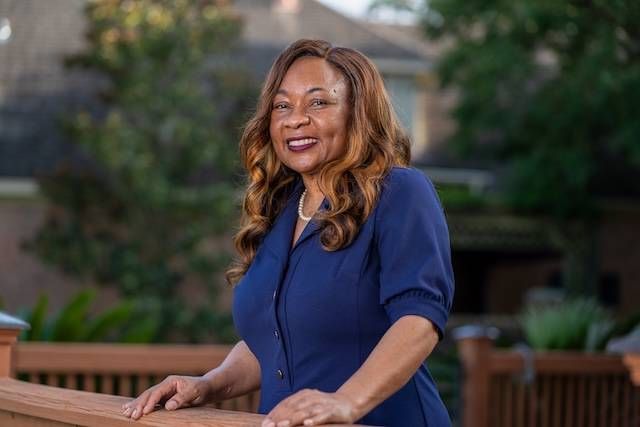
Flowers, now 67, was awarded the MacArthur Fellowship, (the "genius grant") in 2020, and her book "Waste: One Woman's Fight Against America's Dirty Secret" also came out that year. Her prominent role in the movement made it unsurprising that she was chosen as a leader of the WHEJAC.
The issue that brought Flowers to national attention was born from her research showing that some Alabamans were not successfully able to dispose of the wastewater generated in their homes, especially because the region's clay soil made efficient septic systems nearly impossible to build across much of Alabama's "Black Belt." With so many residents not connected to municipal sewer lines, and "straight-piping" their waste just a short distance from where they lived, sewage often pooled nearby and gave rise to hookworm, a scourge more often seen in tropical countries with poor sanitation than in the United States.
What Flowers gained from her experience on the WHEJAC was solidarity with others around the country.
"I remember at one of the gatherings, there were people from New Mexico that talked about being exposed to nuclear fallout from testing, and how they were still suffering, and how there were high cancer rates [in their community]," she says.
"And then, of course, we had a part of the WHEJAC meeting where people called in from around the country talking about various environmental issues. It helped me to understand the length and breadth of these issues, where they exist around the United States."
Her time on the council left her with a clear understanding of the importance of data, bringing her back to her initial fight to be heard in Alabama.
"You know, that was our big argument in the beginning, because when I was talking about sanitation, they kept saying, 'there's no data, there's no data.'… I found out that in the federal government, they don't make any kind of policies, they don't allocate funding or anything if there's no data."
"We have to come up with a way where we develop strategies that are more long term and have a transitional plan, not just get excited because we have money."
And she realized that data was most often lacking when it came to rural communities, like the one she grew up in and advocated for. Among Flowers' triumphs in the waning days of the Biden administration was an agreement between the state of Alabama and the U.S. Department of Justice to "address longstanding wastewater sanitation problems in Lowndes County," action Flowers had long sought. So what does Flowers think today, after that agreement was killed by the Trump administration, calling it an example of "illegal… DEI."
She's already thinking in ways that are more strategic. "We can't be putting things in place that the next administration can overturn," she tells me. "And part of that is, we also now understand that a lot of [the work we do] is not going to be federal.
"There has to be that local and state work and alliances and collaboration going on as well. We have to come up with a way where we develop strategies that are more long term and have a transitional plan, not just get excited because we have money. Money by itself is not going to solve the problem."
Flowers, whose new book "Holy Ground" ties her religious convictions to her long-term fight for environmental justice and other kinds of fairness for all Americans, also describes to me how race has become a convenient way to block the necessary funding to fix sanitation and related issues.
"I know that Black people and people of color tend to suffer more," she says. "But if you are poor, you might as well be Black. The only thing [some politicians have] convinced poor white people of is that they're better off than Black folks. But at the end of the day, we've got the same problems." In other words, the EJ movement may be more successful in the long run if it focuses on poverty, rather than race.
When we talk, Flowers is still glowing from a recent trip to meet Pope Leo XIV, in Rome, where she helped celebrate the 10th anniversary of the Laudato Si' encyclical released by Pope Francis in 2015. This was seen at the time as an unprecedented involvement of the papacy in critical global issues like climate change and sustainability.
I'd read elsewhere that Flowers has invited President Trump to visit Alabama and see the sanitation issues there firsthand. "I would take him to some white communities with sewage on the ground, so he can see that," she says.
Ever optimistic, Flowers believes in the inevitability of solutions to the sanitation crisis in Alabama and elsewhere. "One of the things that we say when people go to those areas" and see things like raw sewage pooling around homes, "is they can't unsee what they've seen. I think that [President Trump] would potentially direct his staff to find a solution."
Another EJ leader I talked with during production of my podcast, Robert Bullard, is known by many as the "father of environmental justice." Of course, the movement has many fathers, and even more mothers, but it's a mantle he proudly embraces.
His story starts the day his wife [environmental attorney Linda McKeever-Bullard] came home and said, "'Bob, I've just sued the state of Texas,' and I said, 'You did what?'
"What we compiled is basically the information that became one of the first studies looking at environmental racism."
"Well, I worked at a state university, at Texas Southern University, where I am now, so she technically sued my employer," he tells me.
"And she said, 'This community is fighting a landfill that's been placed in the neighborhood,' and she [filed a lawsuit] on December 21, 1979, on my birthday. That was my birthday present. She said, 'I need someone to collect data and put it on a map, [showing] where all the landfills are and incinerators are and garbage dumps are [in Houston], and then tell me who lives around them,' and I said, 'Hmm, you need a sociologist.' And she said, 'That's what you are, right?'"
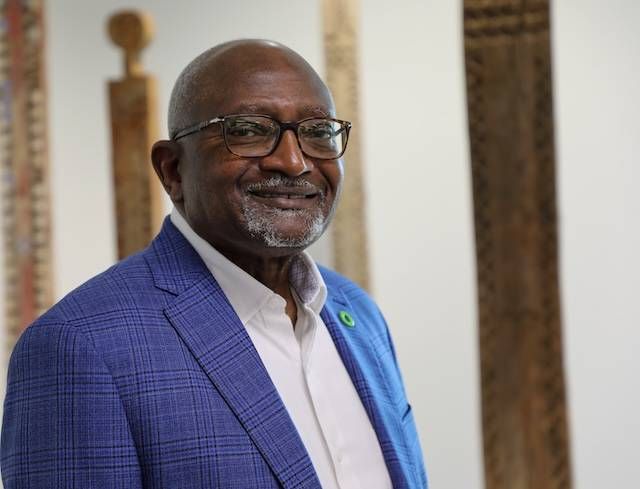
As a sociologist, Bullard, now 79, studied demography, "working on housing and residential segregation. I worked with census data. And so it was a natural for me," to begin the detailed work of mapping where Houston's garbage was going.
Bullard assigned the problem to his students, and he tells me what they discovered together. "What we compiled is basically the information that became one of the first studies looking at environmental racism.
"What we found is that 100% of the city-owned landfills in Houston were located in predominantly Black neighborhoods. Six out of eight of the city-owned incinerators were in predominantly Black neighborhoods, and three out of four of the privately-owned landfills were in predominantly Black neighborhoods.
"Now, when I say predominantly Black neighborhoods, it's like saying my family is predominantly Black. These are mostly, in all cases, Jim Crow-created Black neighborhoods."
Bullard, as an academic and researcher, had some strong ideas about whether EJ should be looked at by the WHEJAC primarily through the lens of race.
"We knew that race was the most potent variable to predict which communities were experiencing environmental challenges and [issues like permitting] and [problems with] pollution, et cetera, and to leave race out of the tools [for recognizing problems and distributing funding] would be a major research error. And so there was disagreement as to whether we should fight and die on that hill.
"I'm a Vietnam-era Marine Corps vet, and I wanted to make sure that this is one we have to fight for. But there were others that felt that if they included race, that it would somehow jeopardize the whole [Inflation Reduction Act] funding for environmental justice."
Compromises were reached. But, in the end, it didn't really matter. President Trump dismissed any funding for environmental justice as "viewed through a distorting, DEI lens" and has tried to take most of the money away from solutions to related problems.
Bullard's response to the federal takeaways has been to strengthen relationships he's developed over the decades. "We've been busy raising monies and trying to get funders and foundations to understand the importance of this work and the outsized footprint of our partnerships over these many years when there were no billions available.
"And yet still we built a movement, we built a track record, and we built trust, and we've made a difference. My dad told me to make sure your name stands for something; your word is your bond; and so you have to be able to look our organization partners in the eye and say we are still working as partners. Just because the money was cut doesn't mean that we're going to somehow sever these relationships. That's what makes us unique in terms of a movement."
As for Waghiyi, she has moved away from her Alaskan island, and now lives in Anchorage. One of her priorities, as she travels the country, and the world, is to bring attention to the connection between exposure to toxics and mental health, an issue that is terrifyingly personal. "Six in my immediate family," she shows me six fingers in her Zoom window, "have tried to kill themselves in the past year, year and a half."
“I do this work because I am a grandmother and help is not coming fast enough for my generation”. -Vi Pangunnaaq Waghiyi
Her work has spread far beyond initial concerns with the abandoned bases and now includes issues like climate change and microplastics. Hoping it's not too much of a cliché, I ask about what positive things she might see in the future.
"That my grandson, who I'm raising, will have a life where he thrives with no health harms, with strict chemical and environmental laws that have been updated and strengthened to protect communities like mine."
She's undeterred by the pullback of money and interest from Washington, D.C. "Our current project is called Protecting Future Generations [PFG] II, where we're doing research on our children. When we [reported] the findings for our first PFG, we looked at reproductive health exposures in our men and women. [And we looked at] classic chemicals, because we're committed to still look at PCBs, because they don't break down easy. In the first PFG project, we [also] looked at flame retardants and PFAS."
Her priority now is discovering whether science has an answer to a puzzle that keeps her up at night — a crisis she believes has been worsened by the toxic chemicals left behind by the U.S. military; a catastrophe that is growing daily as climate change melts the permafrost and glaciers, while ocean currents bring their harvest of pollutants from the entire globe, and tons of microplastics, to Alaska's shores.
The community is seeking a connection between those harms, and data showing that the test scores of Sivuqaq Yupik children have shown troubling declines.
"How can this happen to a population that has relied on Indigenous people's knowledge, who thrived in some of the harshest locations on the planet, all science-based knowledge, that's on par or greater than Western science?" Waghiyi asks.
"And to learn that the children in my community had the lowest test scores, how can that happen? How can we pass on our languages, our creation stories, our songs and dances, our cultures and traditions, if our children can't learn, right?"
After we talk, Waghiyi sends this note, with an Igamsiqayugvikamken, or "thank you," for our chat: "This is why I do this work to make sure measures are in place to protect our most vulnerable, our children and future generations."
____
Steve Mencher is founding producer of "Living Downstream: The Environmental Justice Podcast." For Kansas City PBS, he produced "Beyond Belief: Three Stories of Faith in Action." Reprint and photo use with permission from Steve Mencher.
The opinions and experiences presented in guest articles are those of the author, and do not necessarily reflect the views of the Center.


